← back to the archiveCuratorial Work
Preliminary: Paper as Process
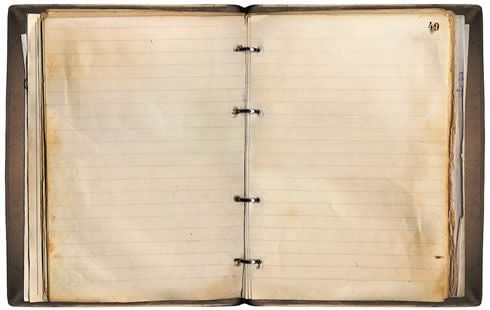
Often perceived as a fragile and an inferior medium in the contemporary art world, paper has long been an imperative material in art making. The works presented here span unfinished studies, drawings, paintings, pamphlets, and poems, each reflecting the versatile role of paper in artistic exploration. In particular, the sketches on view embody a dynamic nature—revealing the ongoing pulse of the creative process rather than a static one.
Inside an artist’s workspace, we find sketchbooks piled high, small crumpled drawings forgotten at the bottom of drawers, unstructured thoughts leading to a book debut, studies that later transform into large canvases—the process of creation unfolding on paper’s surface. Paper is the preliminary of creation, signaling what might come next.
The materiality of paper tells the story of the early stages of making—a bridge between the initial idea and its eventual realization. Diego Garcez’s works, densely injected with a wide range of mixed media, reflects the artist’s versatility and exploratory use of once simple paper surfaces. Veridiana Leite’s sketches, many of which served as studies for later expansive canvases, highlight the meticulous organization of a spontaneous, gestural artist. Gabriela Albuquerque’s sketchbooks, worn from travels through countrysides, beaches, and other landscapes, were never empty upon her return, revealing paper’s role as a constant companion in the artist’s trajectories. Paula Ferreira’s manifesto, scattered across the gallery floor and extended into the street, evokes the nostalgic confidence of risographs and paper as a vehicle for circulation of independent ideas. Juliana Matsumura’s small works offer a quiet, contemplative space, exposing her commitment to the unpredictable and delicate nature of the monotype process.
Paper as a preliminary, a starting point, a laboratory for experimentation. Paper as a relic, vulnerable to the elements, reactive to temperature and the passing of time. Paper as a space where ideas take form and later on materialize into something else.
As the English essayist, critic, and painter John Berger notes in his essay The Basis of All Painting and Sculpture is Drawing:
“For the artist, drawing is discovery . . . . Now I began to see the white surface of the paper on which I was going to draw in a different way. From being a clean flat page it became an empty space. Its whiteness became an area of limitless, opaque light; an area that it was possible to move through but not to see through. I knew that when I draw a line on it – or through it – I should have to control the line, not like the driver of a car, on one place: but like a pilot in the air, movement in all three dimensions being possible”
Berger’s understanding of drawing as a boundless method of experimentation mirrors the idea of the medium itself being integral to how the artist’s message is conveyed. Among the works presented, the use of paper represents a choice driven by curiosity rather than apathy, by a whimsical desire to conjure rather than by a need to prove.
Stephanie Albuquerque Wruck